

This Summer Ela U, 10SHU, a passionate and prolific writer entered two nature and wildlife themed writing competitions.
She wrote ‘Where the Valley Breathes’ for Hen Harrier Action’s 2026 Young Wild Writers entering their Senior Category (ages 13-16 years) and came second with this piece that celebrates the theme of our shared planet. The judges said “Ela uses all the senses for descriptions, and I really feel I am there – witnessing the moment.” Read it in full alongside the other winners here.
Ela also wrote another piece, ‘My Year has no Months’, (read in full below) which is currently shortlisted in the Scottish Wildlife Trust’s Words of the Wild 2026. Her piece was one of 18 final pieces selected from over 670 submitted entries, spanning English, Scots and Gaelic and attracting entrants as young as five years old. Six talented winners will be chosen by the Scottish Wildlife Trust’s judging panel but in addition one writer will be chosen for their People’s Choice Award.
You can read all the entries and vote for your favourite here on their website. We wish Ela the best of luck for when the winners are announced on the 24 October.
Ela said: “I entered these competitions to improve my writing skills and possibly to get feedback, but also to enjoy the process of writing and exploring my different thoughts about nature through my writing. I wrote my pieces over the summer, I think in August, and I got inspiration from books like ‘The Hunger Games’ and also by listening to songs about nature.”
My Year Has No Months
By Ela U, 10SHU
My year has no months.
It doesn’t begin with January or end with December. It begins with a sound.
Somewhere over the moss, hidden by a floating mist, a curlew calls. I never see it straight away. I hear it first, that strange bubbling cry that sounds lonely and hopeful at the same time. It reminds me that winter is loosening its grip, even if the mornings are still cold enough to sting my hands.
That is New Year’s Day.
The next season arrives with the gorse flowers. People always say they smell like coconuts, and every year I check to see if they’re right. I don’t know if it really does, or if I’ve just convinced myself because everyone else says so. Either way, the hills suddenly seem brighter, as though someone has scattered little pieces of sunshine across them.
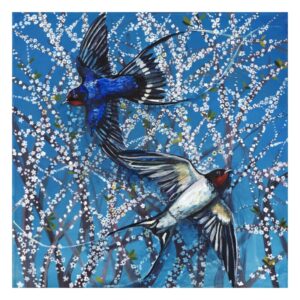 Then comes the season of swallows.
They appear without warning, slicing through the air above fields and farmyards. I always wonder how something so small can travel so far and still know exactly where it belongs. I struggle to find my classroom on the first day back after summer, yet they somehow find the same nest under the same roof every year.
After that comes the season everyone pretends to hate.
The midges.
They arrive in clouds, finding every bit of exposed skin with terrifying accuracy. We wave our arms around, complain endlessly, and somehow still spend all day outside. Looking back, I don’t think of the bites. I think of long evenings when the sun didn’t seem to know when to set, and the sky stayed pale long after everyone should have gone home.
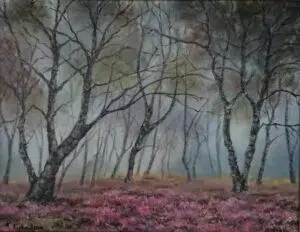
The year starts slowing down when the heather turns the hills purple.
I’ve never understood how an entire landscape can change colour almost overnight. One week it’s green and brown. The next, it looks as though someone has spilled paint across the moors. Bees seem to know before we do. They’re already there, drifting lazily between the flowers while the air hums around them.
Then the rowan berries appear.
Their bright red clusters seem almost too colourful for autumn, like tiny warning lights hanging from the branches. Soon after, the geese return, flying overhead in ragged V-shapes. You hear them before you see them. Everyone stops talking for a second to look up, even if it’s only for a moment.
Winter doesn’t begin with frost.
It begins with silence.
The insects disappear. The woods feel bigger somehow, their bare branches no longer hiding anything. Even familiar paths seem different without leaves to soften them. I can hear streams from much farther away, and the wind carries sounds across the hills that summer keeps hidden.
People say the seasons always come around again.
I’m not sure that’s completely true anymore.
The curlews don’t always arrive when I expect them. Sometimes flowers bloom too early, only to be caught by another frost. Winters seem shorter than the stories my grandparents tell. Every year the changes are small enough to ignore, but they build up quietly, like pebbles in a stack.
I sometimes wonder what my calendar will look like in another twenty years.
Will there still be a season of curlews?
A season of swallows?
A season when the hills blush purple with heather?
Or will they become stories that begin with, “I remember when…”
I hope not.
 Because the best thing about my calendar is that no one printed it. It isn’t hanging on a wall or glowing on a phone screen. It’s written by birds, flowers, weather and light. It changes a little every year, but it still reminds me to look up, to listen, and to notice.
Tomorrow someone will ask me what month it is.
I’ll probably answer “April” or “September.”
But I’ll be thinking about something else.
The season of curlews.
The season of swallows.
The season of waiting for the first frost.
The season that reminds me the wild world has always been keeping a better time than we have.